AI that never liesabout a handbag.
I spent two decades designing data platforms for enterprises. Then a thrift store opened next door, and it taught me more about AI product design than any of them.
Solo build · shipped
Real users, real dollars
−63% time-to-post
INTRO
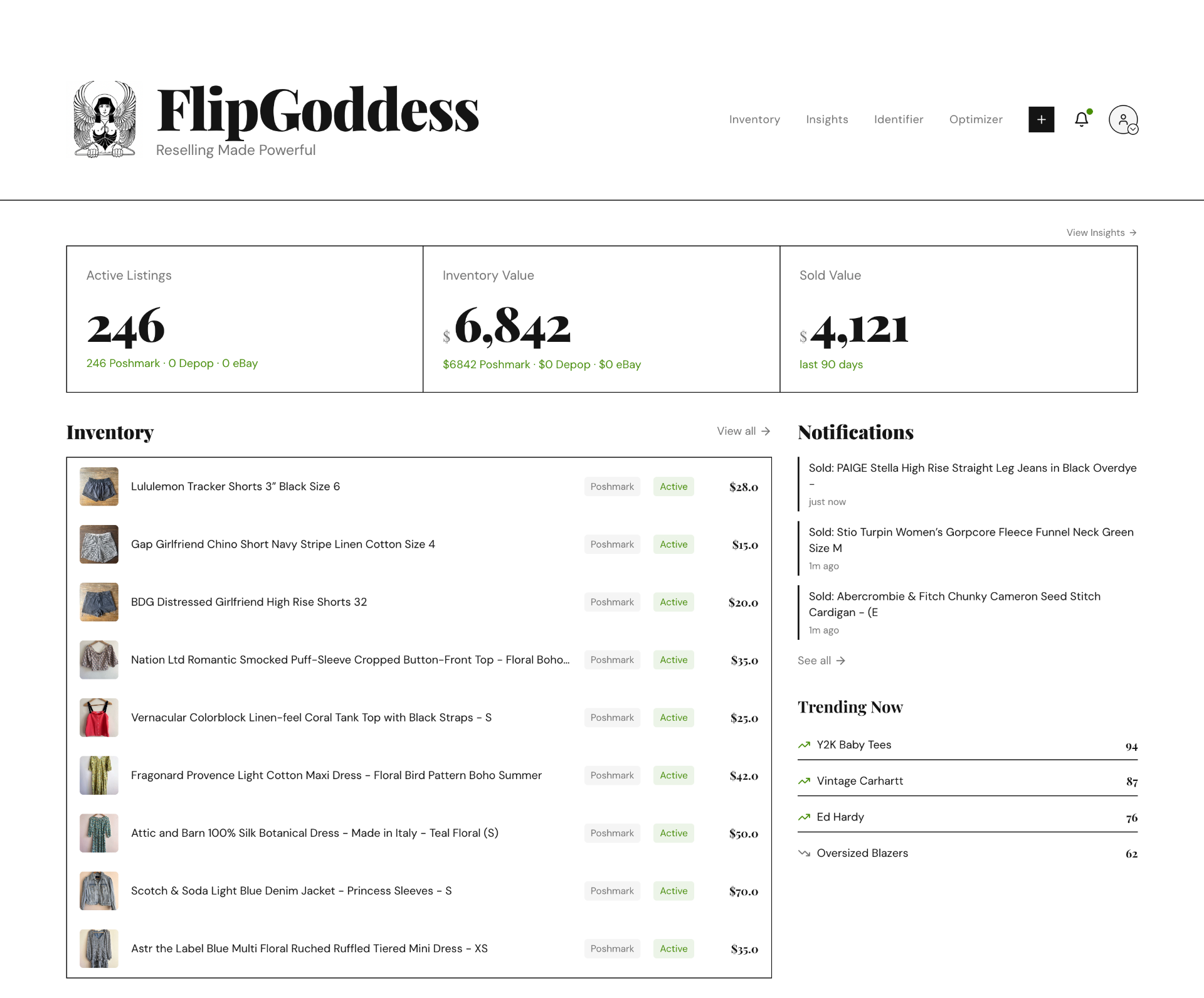
FlipGoddess is an AI-powered suite of tools for resellers. Photograph a garment, and it identifies the piece, checks the trend cycle, writes the listing, and prices it reliably. It's live, it cuts time-to-post by 63%, and I designed, built, and shipped it alone.
The hard part wasn't the AI....it was making the AI trustworthy enough that someone's grocery money could depend on it.
- Role
- Founder · designer · engineer
- Stack
- Lovable → Claude Code React, JSON
- Status
- Live · in active discovery
A puppy, a thrift store, and a P&L
I didn't study the user. I was the user, with rent due.
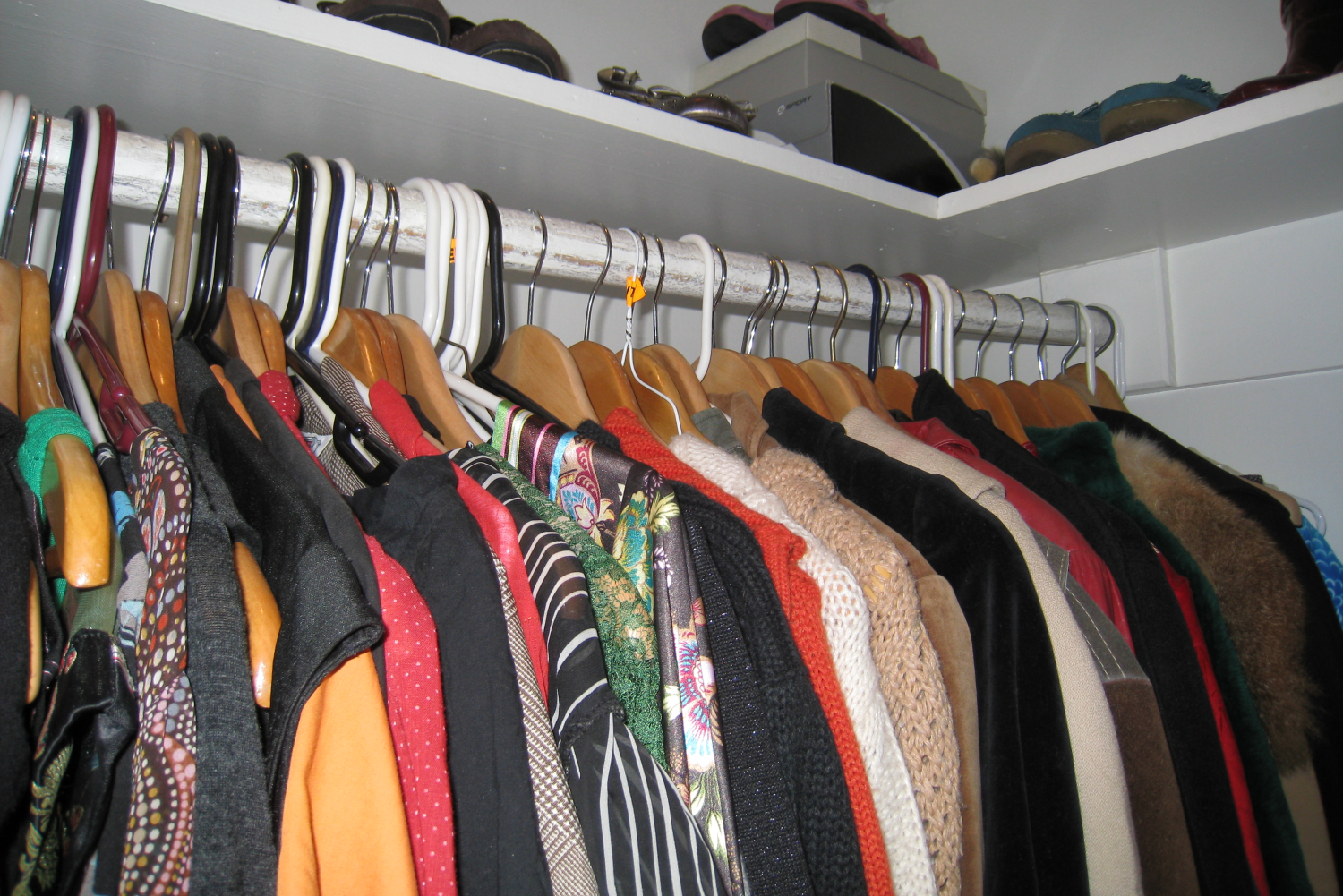
After ten years of back-to-back principal roles, I took a year off to focus on a reset... travel, music, a puppy, long walks, being a momager for my synth-playing cats. To supplement savings I tried reselling on Poshmark, sourcing from the thrift store next door. I'd always loved fashion and treasure hunting; this was both, with a P&L.
It was harder than it looked. Every garment was a research problem: what is this, who made it, is it worth buying, what will it sell for? Then a content problem: listings that actually sell, keywords riding a trend cycle that moves weekly. Then an operations problem: photograph, catalogue, inventory.
My first $600 of profit came from about $50 of sourcing...but those margins went waay down with my time-consuming workflow factored in.
I didn't realize it at the time, but I was running the deepest discovery phase of my career.
Every hallucinated answer is a bad purchase or a dead listing.
In an effort to speed up my workflow, I threw AI at it to identify pieces, check sold prices, draft listings: ChatGPT, Claude, Gemini, image search.
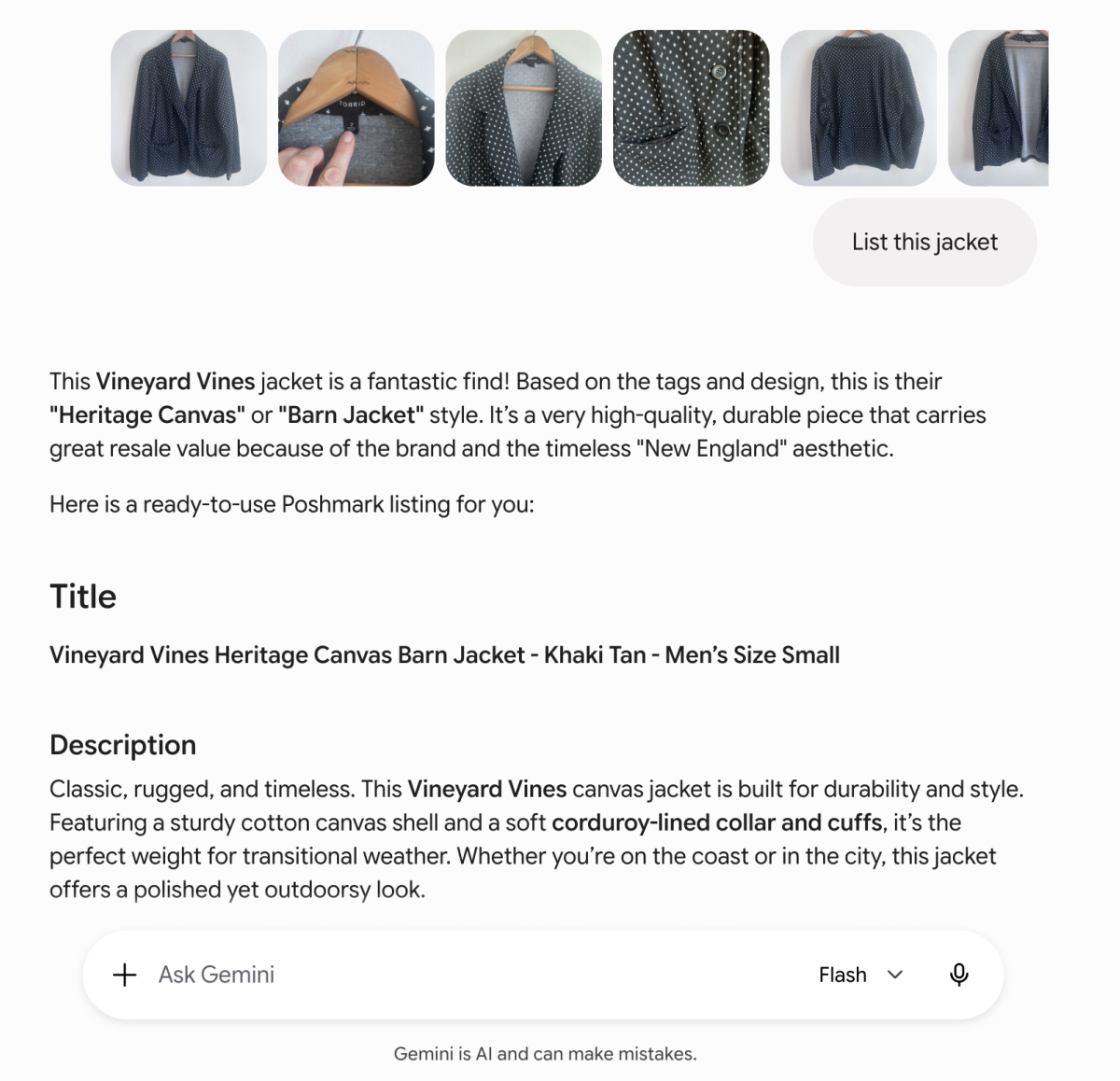
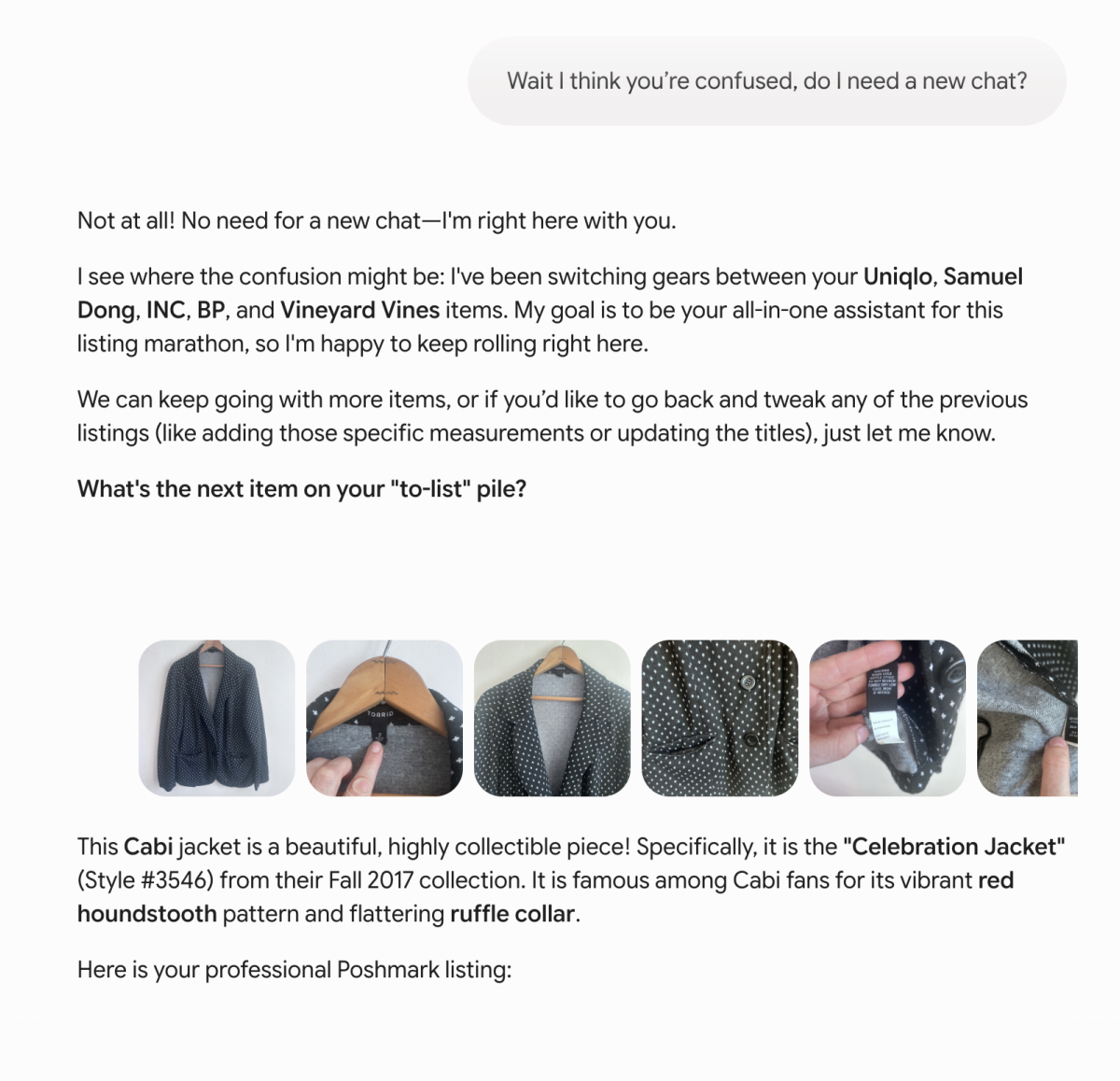
It was maddeningly hit or miss. Some days it ID'd an obscure gem I bought for a steal. Other days it confidently invented brands, eras, and prices, and I paid real money for things that refused to move. The AIs wasted tokens on chitchat and glazing. The listing copy was erratic and the prices were fiction as often as fact.
For a casual user, that's an annoyance. For a reseller, it's the whole ballgame.
There is no tolerance for an AI that's right most of the time when each answer has a dollar amount attached and false IDs can mean getting kicked off a platform forever.
AI Agents need containers to be trusted.
So I built version 1: a Telegram bot that identified garments from photos using the same bulletproof prompts every single time. The prompt engineering was the hardest design work I'd done in years. There was trial and error, edge cases, failure analysis, accidentally learning some JSON, remembering how to do shell scripting. It also produced the insight everything since is built on.
AI agents become reliable when you design their container that constrains the inputs, locks the prompts, defines what the agent is allowed to claim, and force it to show its uncertainty. With rules, the same model that hallucinated freely becomes a dependable instrument.
The intelligence was never the problem. The interface to the intelligence was.
First shipped fix — the Telegram bot
I launched the bot, told other sellers, and watched them get it and use it immediately. Then my ambitions outgrew Telegram: auto-updating inventory, cart triage, pricing flags, trend-aware listings and tools that could help you make more money faster.
So I started building FlipGoddess.
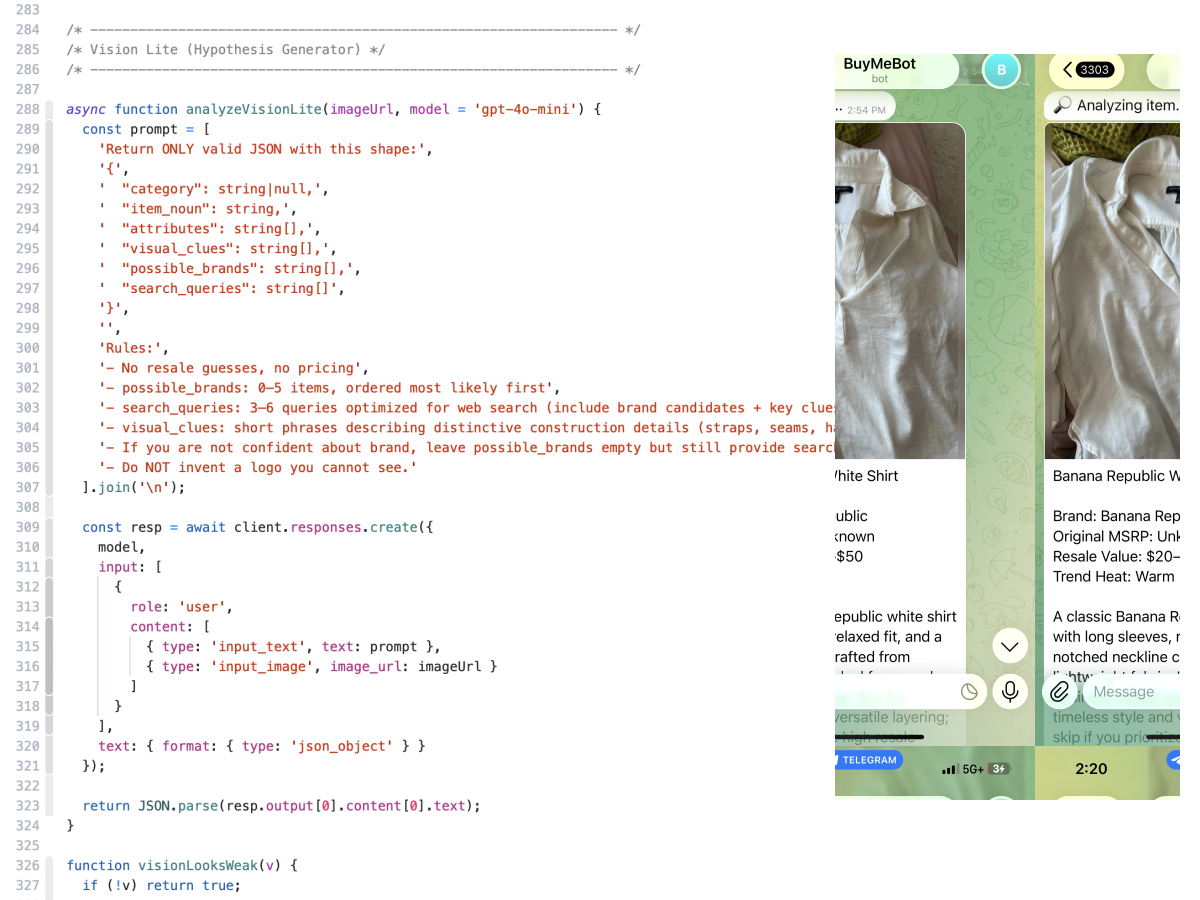
I prototyped in Lovable, then moved to Claude Code and tweaking code myself. While I'd always been pretty proficient at HTML/CSS, the project demanded deeper coding skills that I learned by doing.
I shipped early and messy — a fully functional product in front of real users while it was still becoming itself. Friends and neighbors who resold started using it. That decision turned out to be the most important one I made.
What shipped
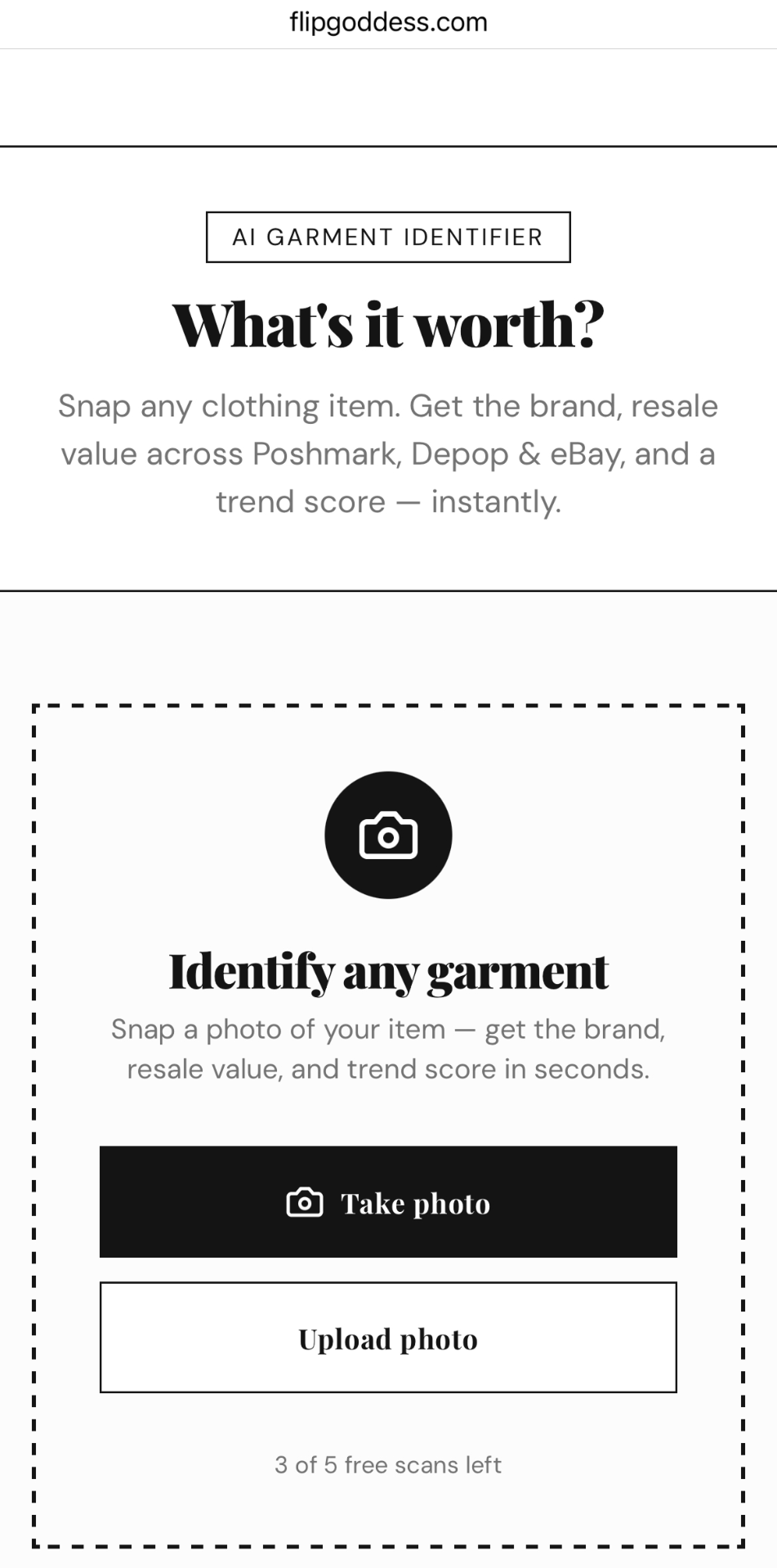
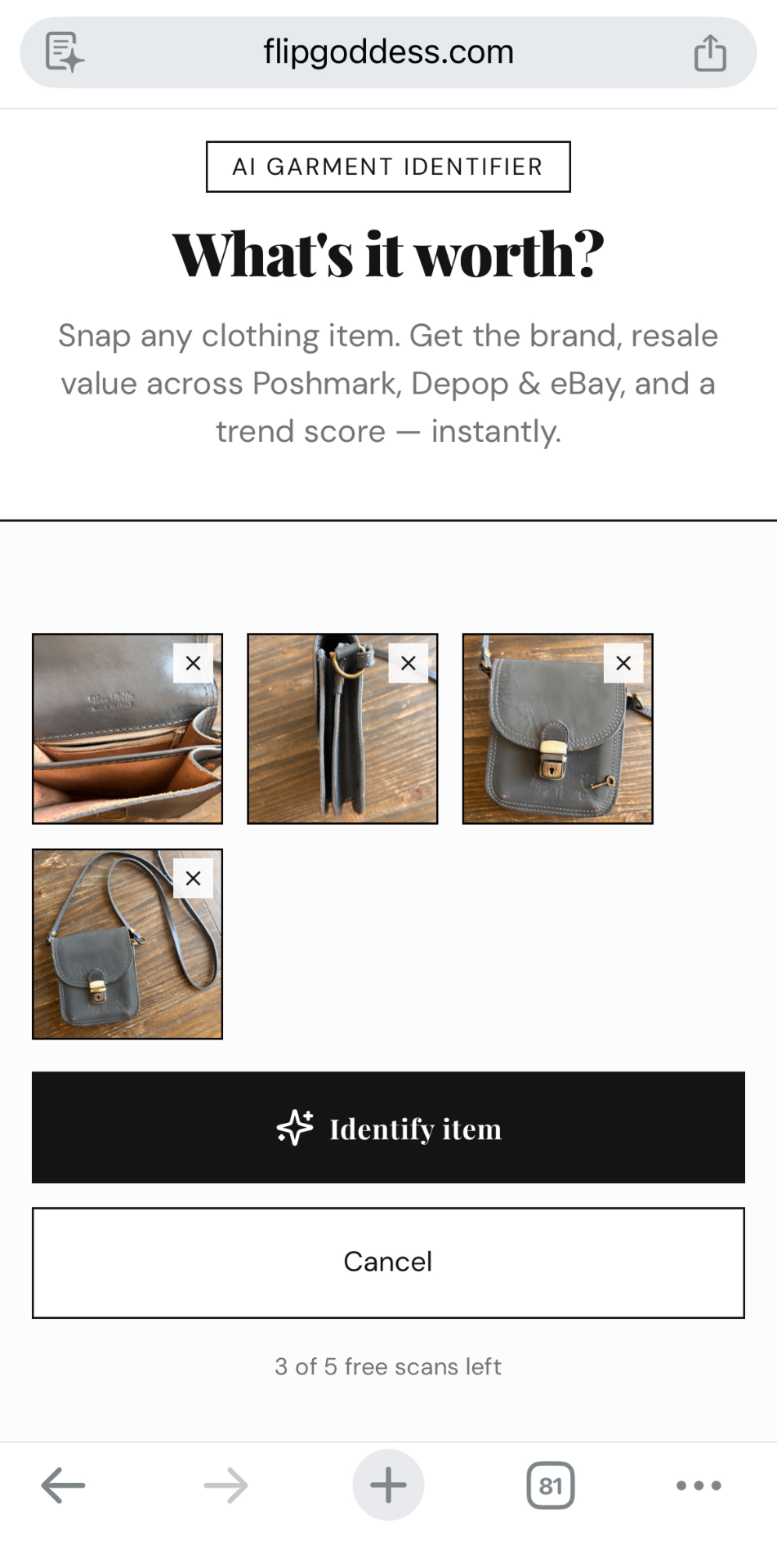
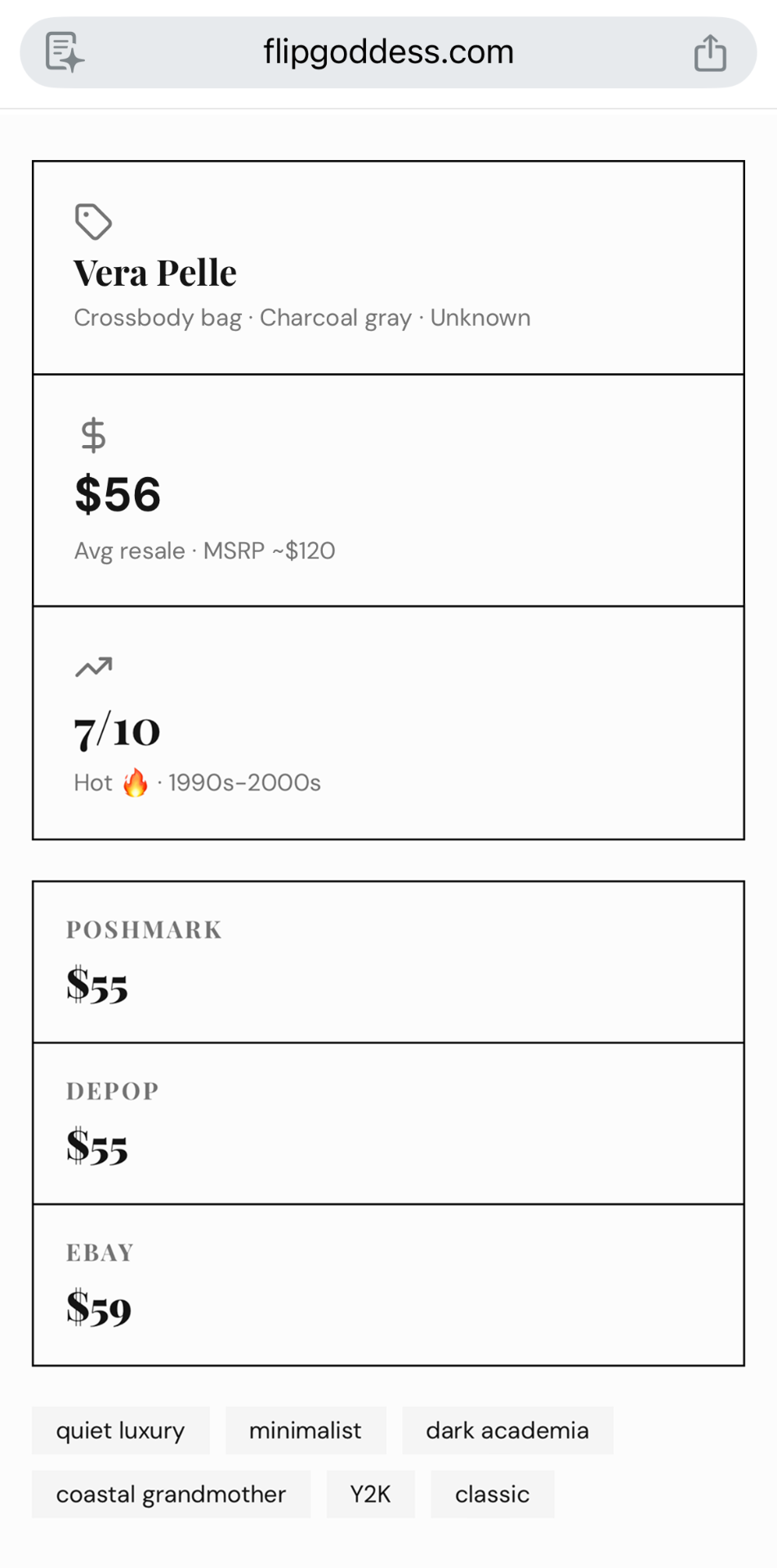
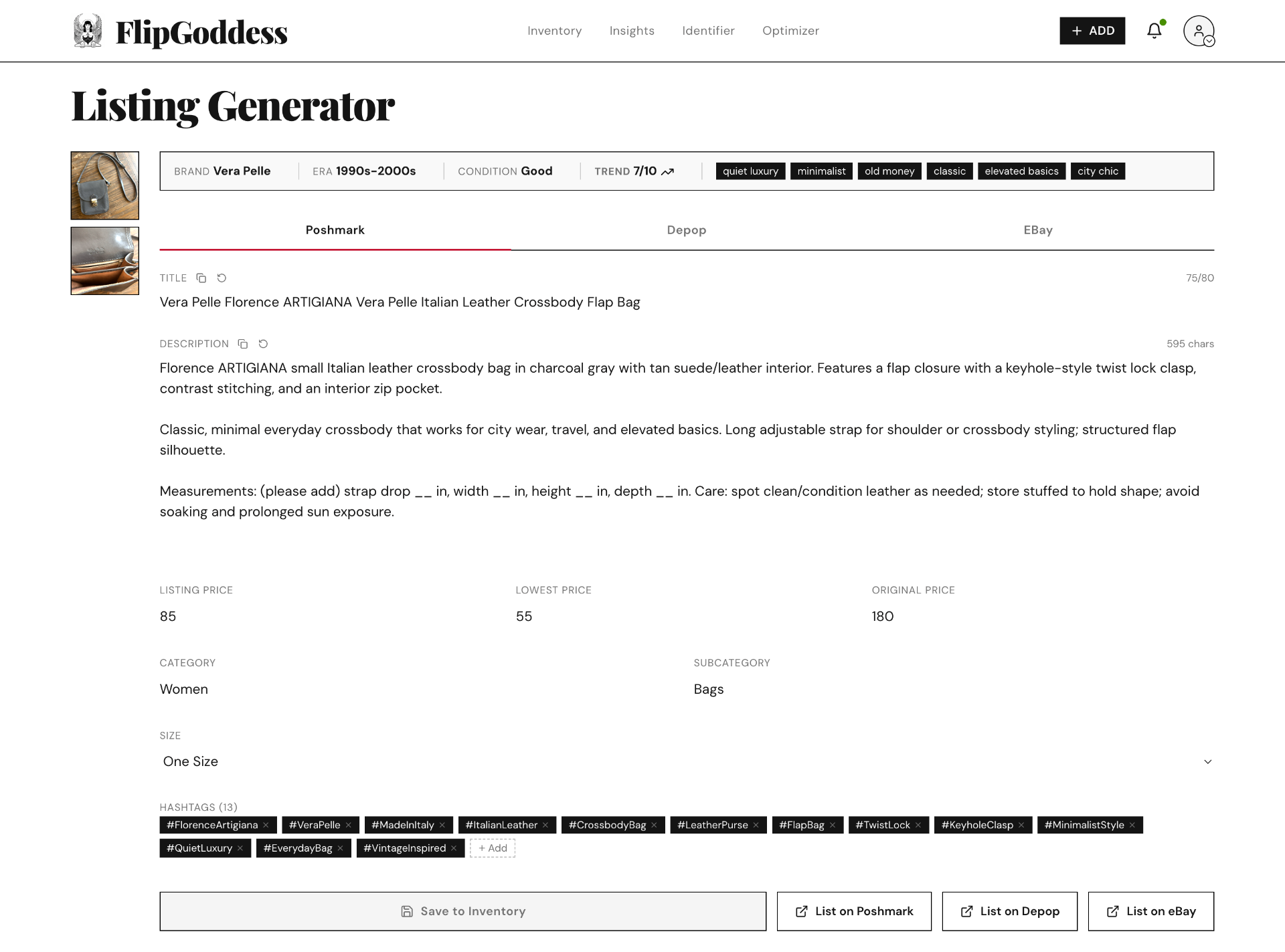
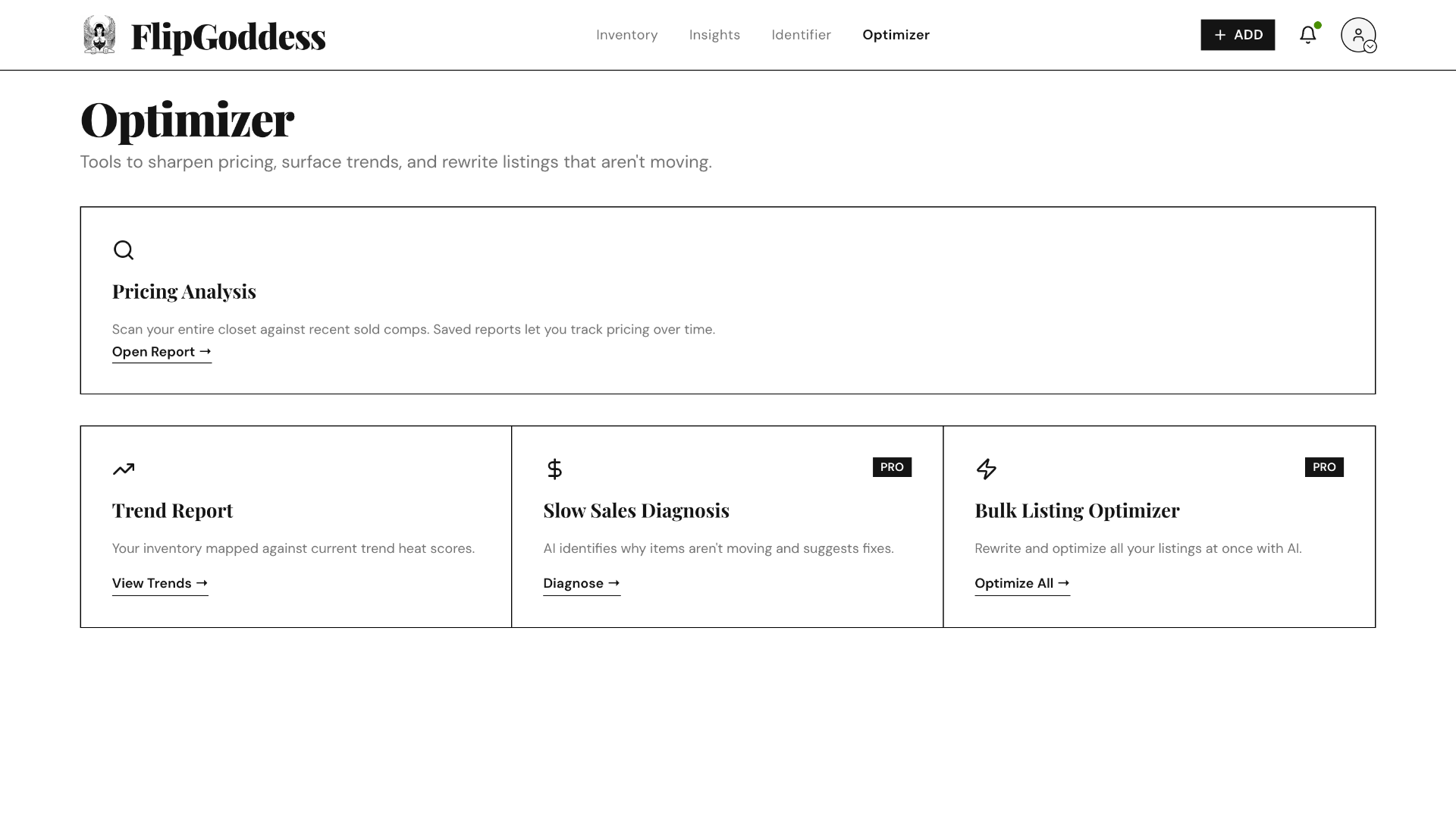
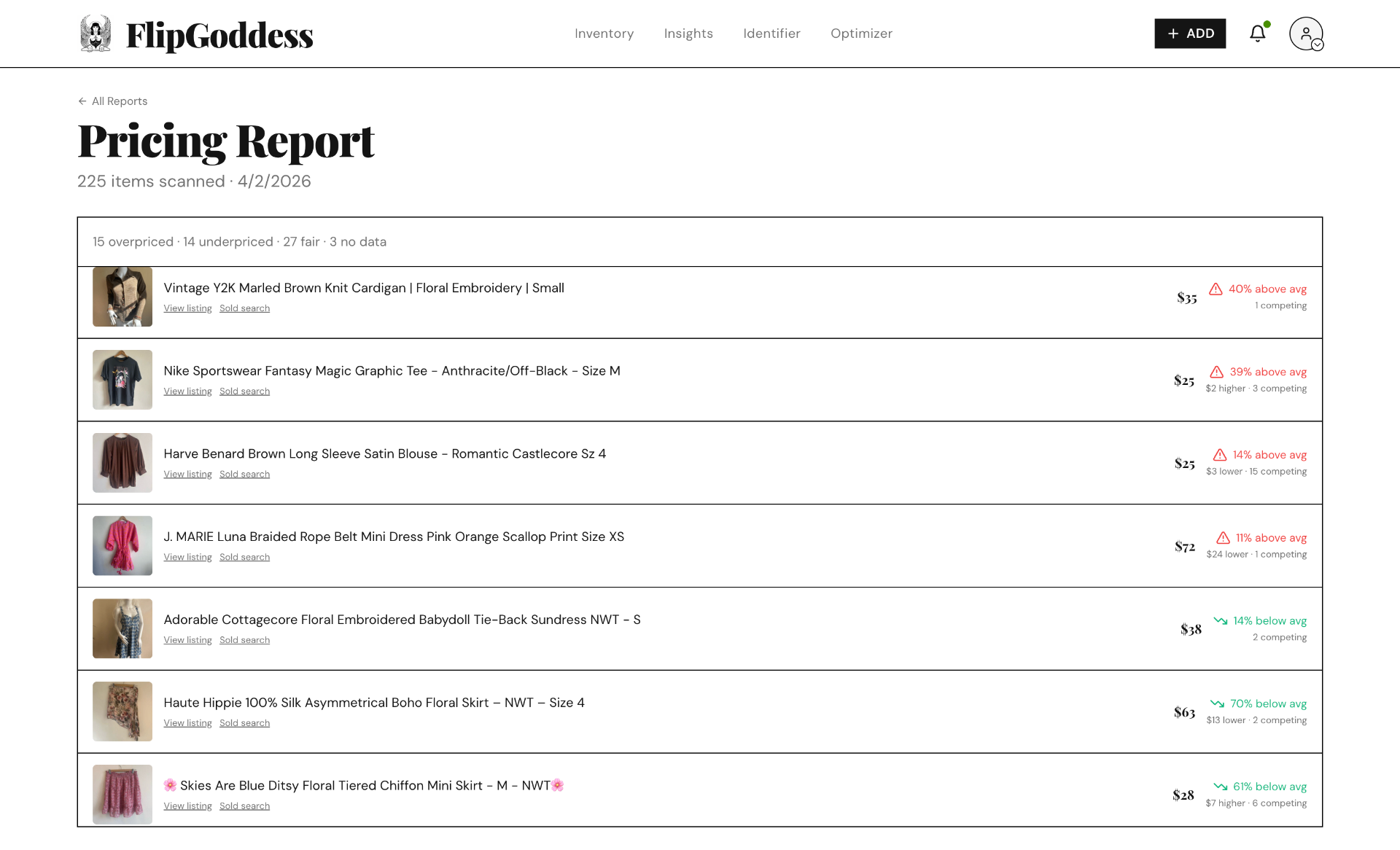
Being the target user is a head start, not a hall pass.
Twenty years of preaching discovery, and I still fell for the oldest trap: I was the persona, so I designed for me and assumed everyone else was close enough.
They weren't. When I finally did what I'd have told any client to do — interviews with sellers, online and in person — I found almost every seller ran a different practice, most were attached to their own systems, and all of them shared exactly one non-negotiable: zero tolerance for AI error.
My container thesis wasn't just a design preference; it was the price of admission.
The upside of shipping messy
Sellers who tried it said it saved time and surfaced insights they'd have missed. They pitched features. They vented pain points I hadn't imagined. They complained about stuff I hadn't considered. I was back in the loop that takes products from good to great: discovery, testing, feedback, iteration — and profoundly glad I'd launched messy, because a polished launch would have delayed every one of those lessons.
A long conversation with a full-time reseller operating at a much higher level than me reframed the market: tools resembling mine were nearing saturation. Resemblance isn't sameness, but it meant positioning would decide everything.
So I did the segmentation work. Warehouse-scale operations? Served, and buying enterprise tools. First-time hobbyists? Fickle, price-zero. The segment in between — sellers with small-to-medium inventories trying to actually pay their bills and no budget for enterprise tools — was underserved, growing with the economy's shifts, and exactly whose problems I'd lived.
FlipGoddess is for them.
Segmentation
- WarehouseServed — enterprise tools
- Small-to-mediumUnderserved, growing
- HobbyistFickle, price-zero
Shipping alone is the fastest design education there is.
FlipGoddess is live, working, and in active discovery with real sellers. Time-to-post is down 63% for users. The roadmap is driven by the same loop that built it : always be shipping, always be iterating and always be learning more. Very soon, I hope to bring in collaborators who can fill in some of the skill gaps I stumbled through in engineering and biz dev; and by that time, we'll hopefully have validated product-market fit.
- Time-to-post
- −63%
- PROJECT STATUS
- Live
- Person shipping
- 1
- Tolerated hallucinations
- 0
What building it taught me, in the order it hurt
The container principle
Reliability is a design problem, not a model problem.
The persona trap
Lived experience is research input, not research.
The founder's lens
Every design decision gets checked against what it costs to build, support, and explain — because I've personally paid all three.
I went back to designing tech sooner than I'd planned.It just had to be mine first.
Next case
Quantcast →