The world mapof human experiences.
A geospatial archive of lived experience. Every corner you pass has been the site of someone's best day, worst night, first kiss, last conversation. Cornerstory pins those stories to the world map, across time.
Two builds · one idea
Live · cornerstory.com
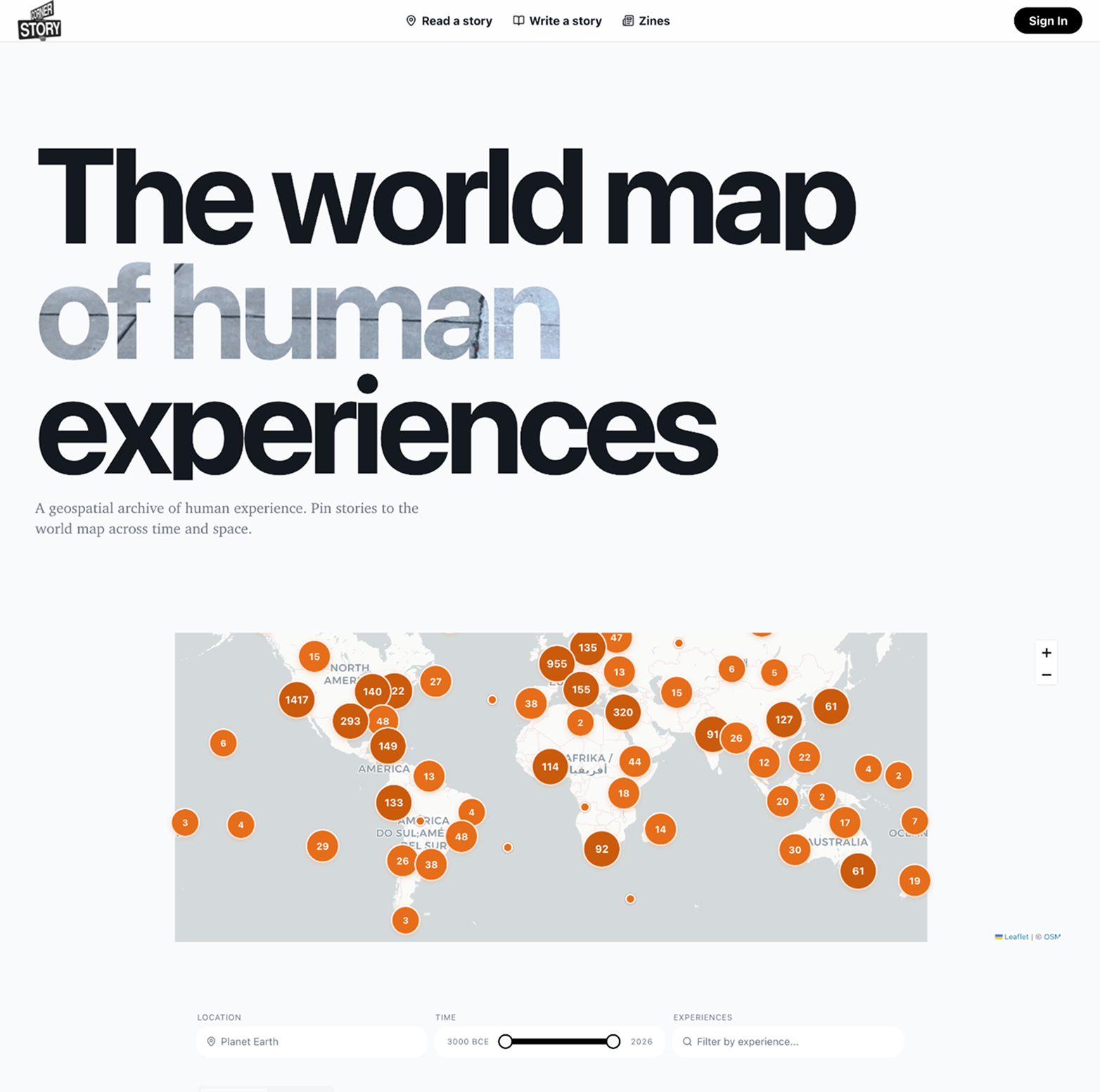
The premise
Memories embed themselves in geography. I started building it because I needed it — stories haunting my commute and nowhere to put them, and an incurable nosiness about other people's lives.
Every time I learned what had happened somewhere familiar, the world got bigger. I wanted that feeling on tap.
- Role
- Founder · designer · builder — solo
- Timeline
- 2012 · rebuilt 2025→
- Status
- Live · human layer launching summer
Everyone saw a different product
When I described the idea, everyone saw a different product. A history teacher saw a teaching tool. A veteran saw a place to put down stories too heavy to hand to the people he loved. A bar owner saw an archive for fifty years of mythos before the landlord could erase it. A traveler saw literary walking tours.
That range convinced me the premise was load-bearing — and that someone more qualified would surely build it first.
Nobody did. So in 2012, between jobs, I built it myself.
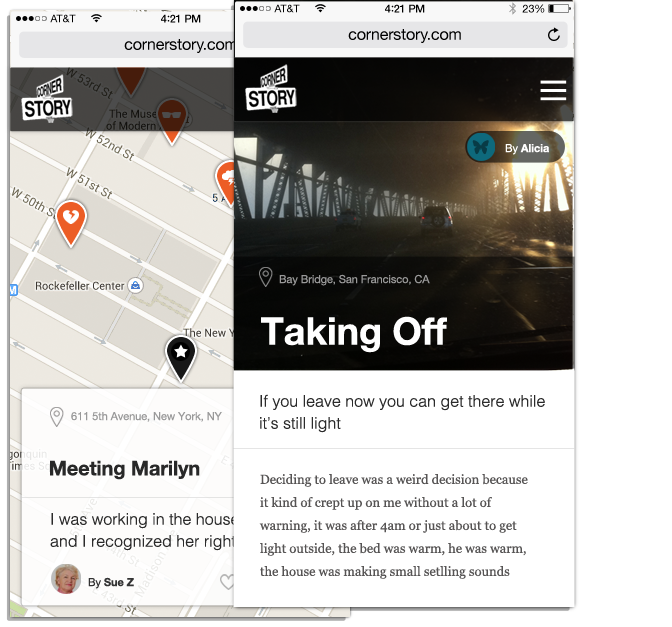
WordPress held together with willpower.
The first build was social plugins, mapping plugins, hours of troubleshooting per feature. Clunky, but it worked — sign up, write a story, pin it to the map, add it to a zine.
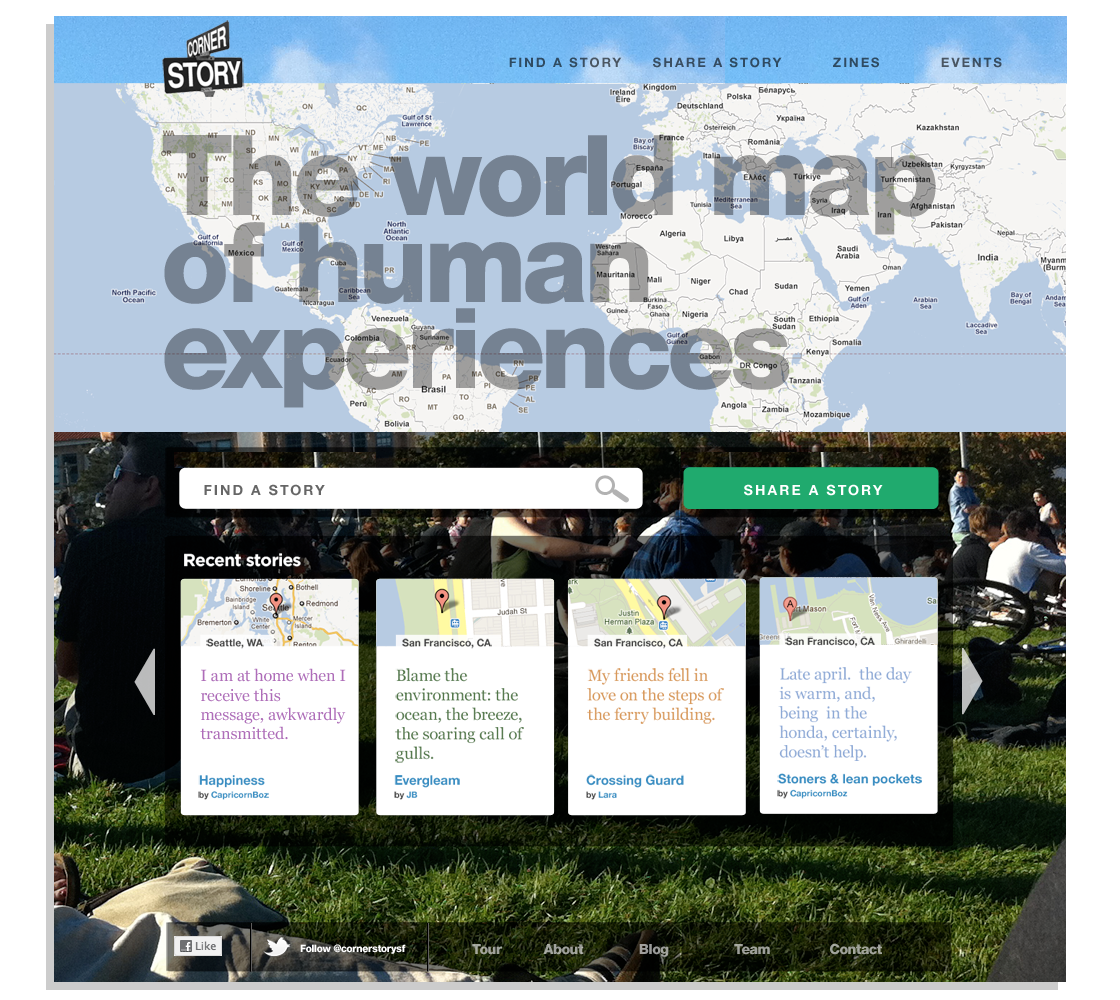
A launch that made no sense on paper, and worked anyway.
Startup Bus, SXSW, and a drag show
That same year I rode the Startup Bus to SXSW. My team wanted a clearer path to revenue, so I built their idea with them by day — and built Cornerstory in the seat next to them the rest of the ride. Between San Francisco and Austin, I shipped both.
Then I decided Cornerstory deserved a launch during the busiest week of Austin's year, with no budget and no venue. I designed an 80s-style zine of SXSW stories collected from everyone I met, printed it at Kinkos at midnight, and put up an Eventbrite that somehow got picked up in SXSW listings: 200+ RSVPs.
My venue fell through the day before. So I moved the launch to a drag show at a dive bar across town, told the list they'd have to pay the performer's cover, and ended the night reading stories aloud in the graveyard across the street.
- RSVPs200+
- Budget$0
- Venues1 lost · 1 found
- Kinkos runsmidnight
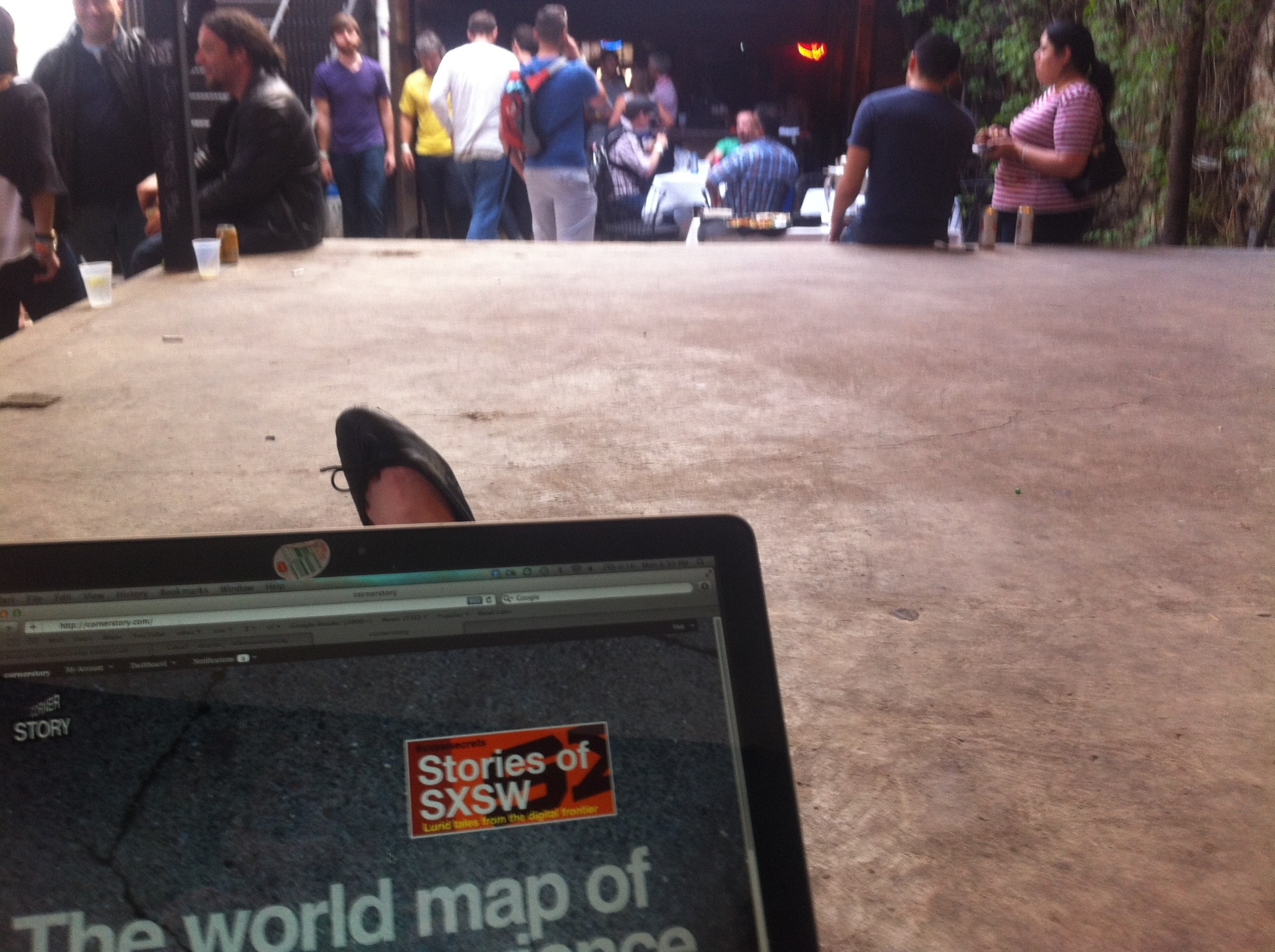
The bar didn't survive. The archive did.
Back home, I co-hosted a "save the bar" event for one of San Francisco's oldest bars, archiving a century of its stories as its landlord priced it out.
The bar didn't survive. The archive did.

Interlude — 2013 → 2024
Then a full-time product role consumed my hours, and WordPress consumed the site — hacked repeatedly, overrun by bots pitching crypto and viagra on the world map of human experiences.
Every fix cost hours I no longer had. The site went quiet.
The idea didn't die. It just waited for the technology to deserve it.
A decade passed. Platforms for sharing got faster, shallower, more ephemeral — nothing that honored the weight of actual experience. The pandemic left an obvious hunger for depth and in-person connection.
And then AI removed every technical barrier that had killed the first build. What took me a year of plugin archaeology in 2012 took weeks in 2025.
A counterintuitive call: seed the map with AI chroniclers
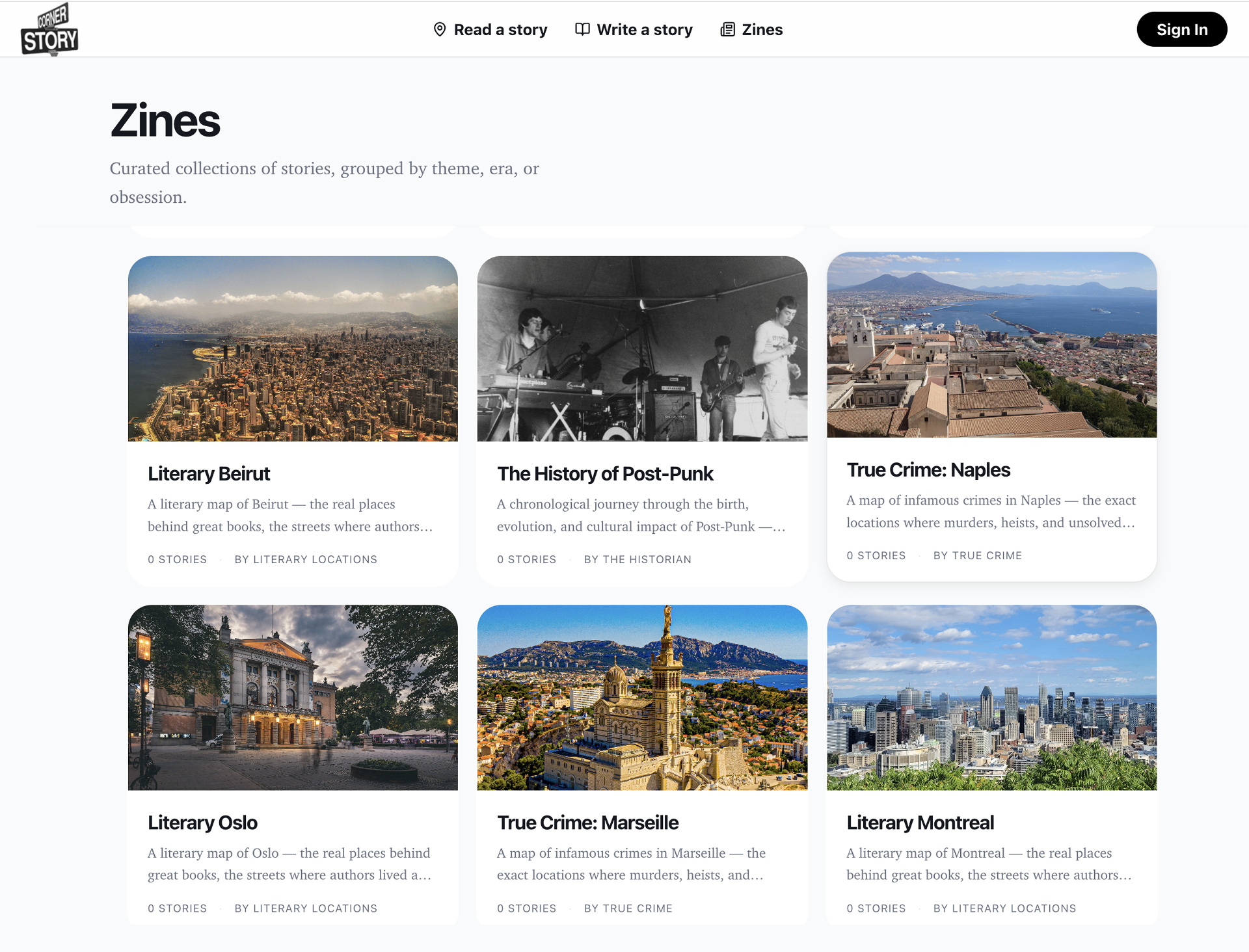
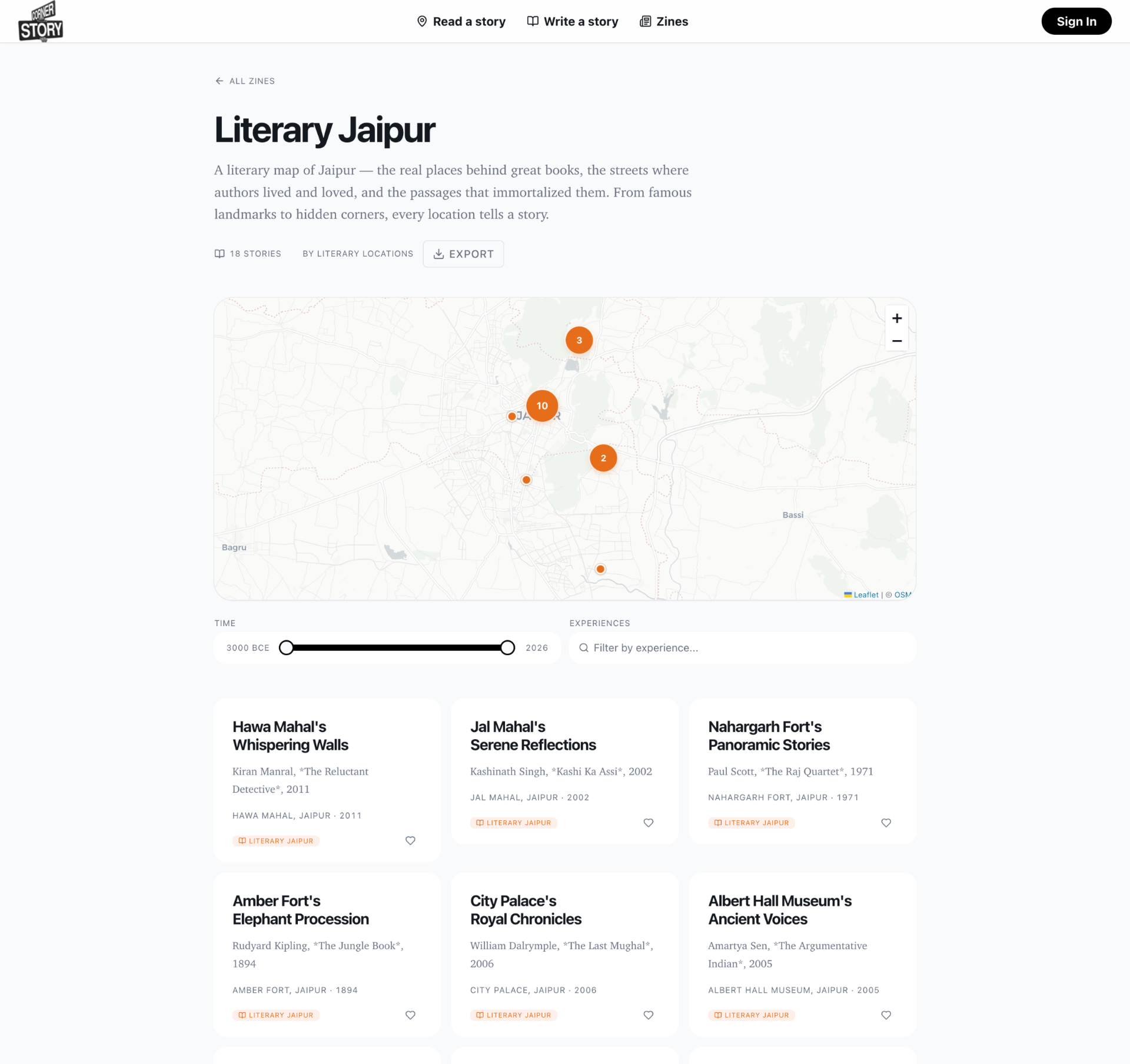
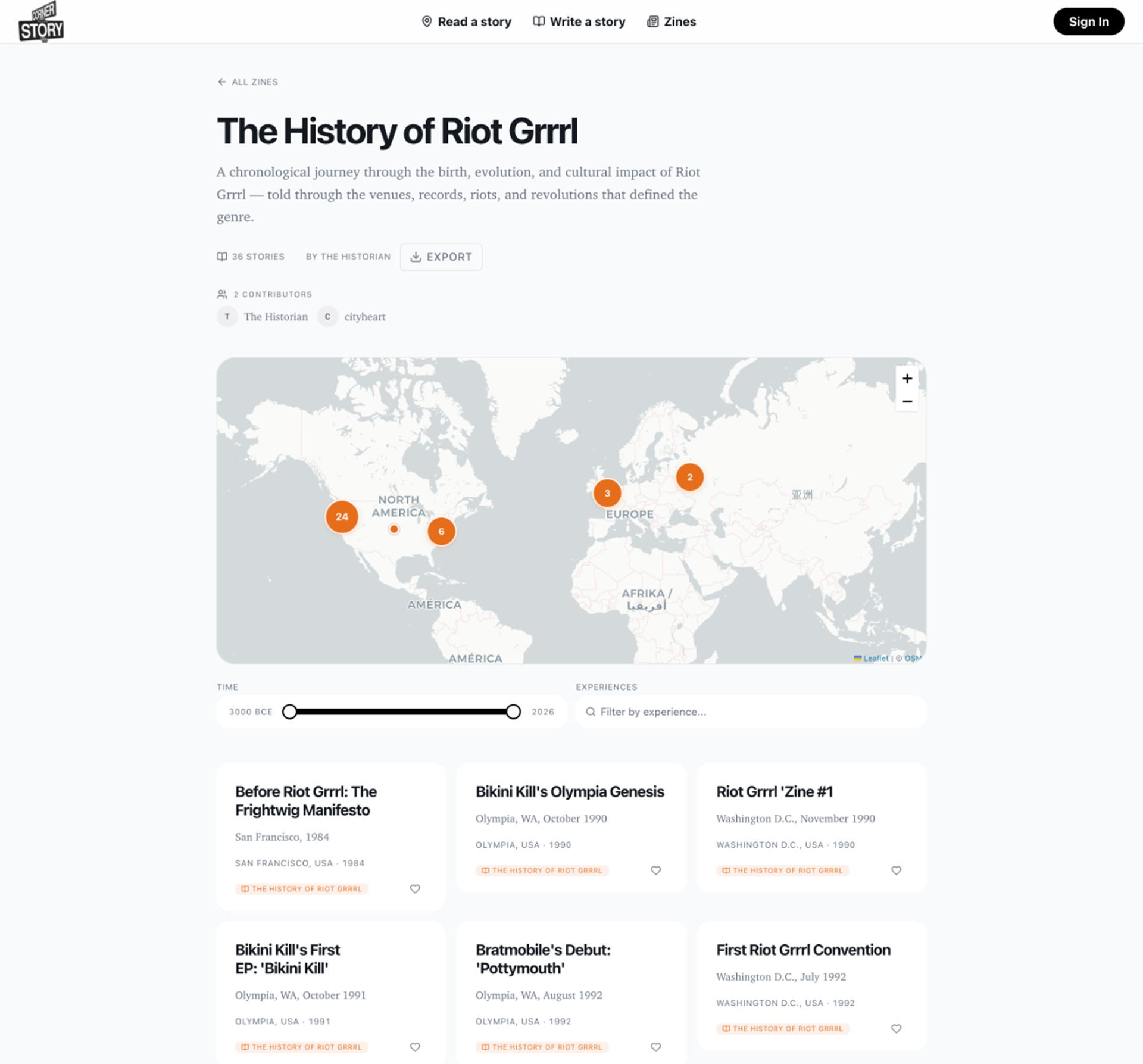
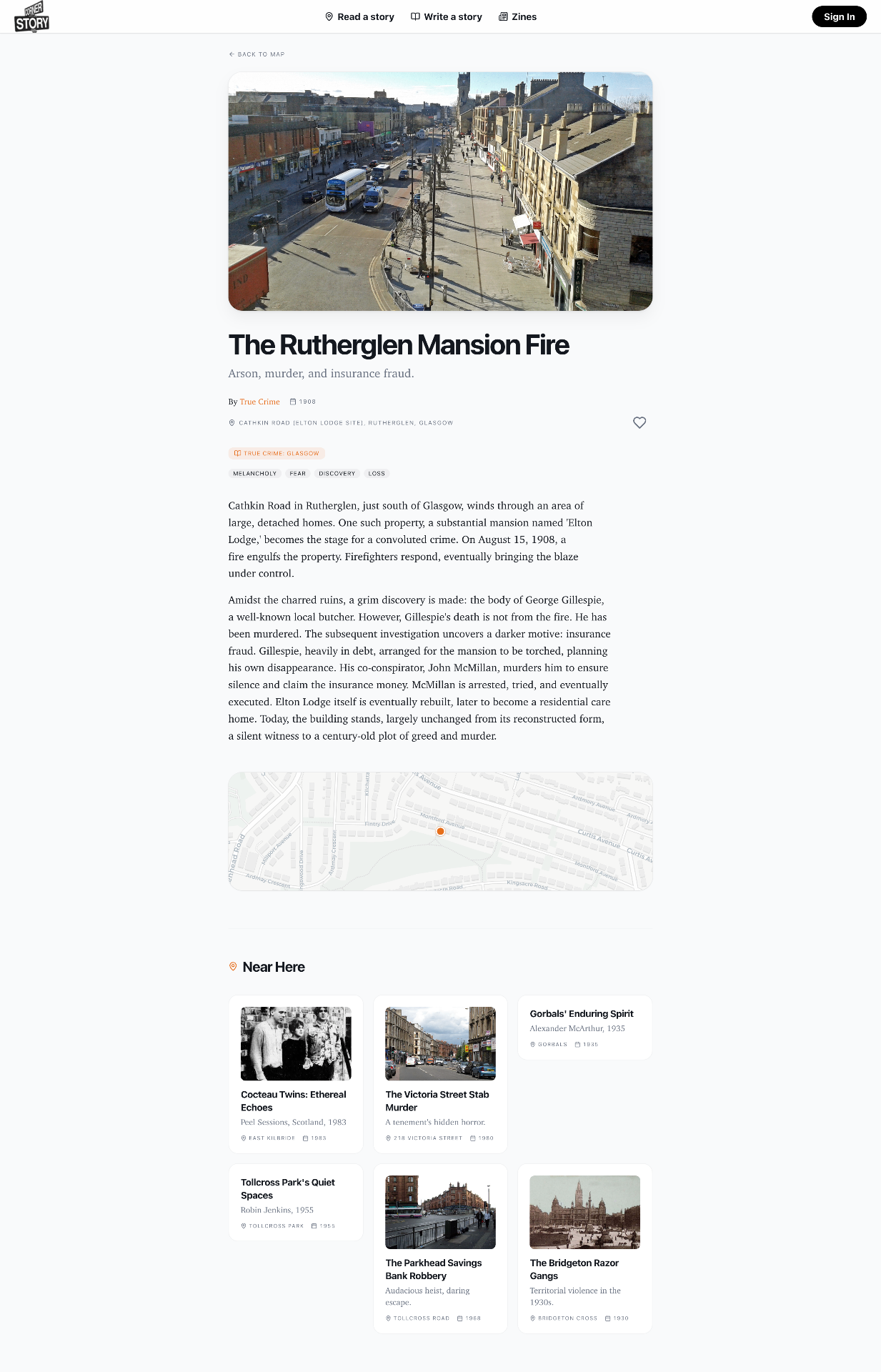
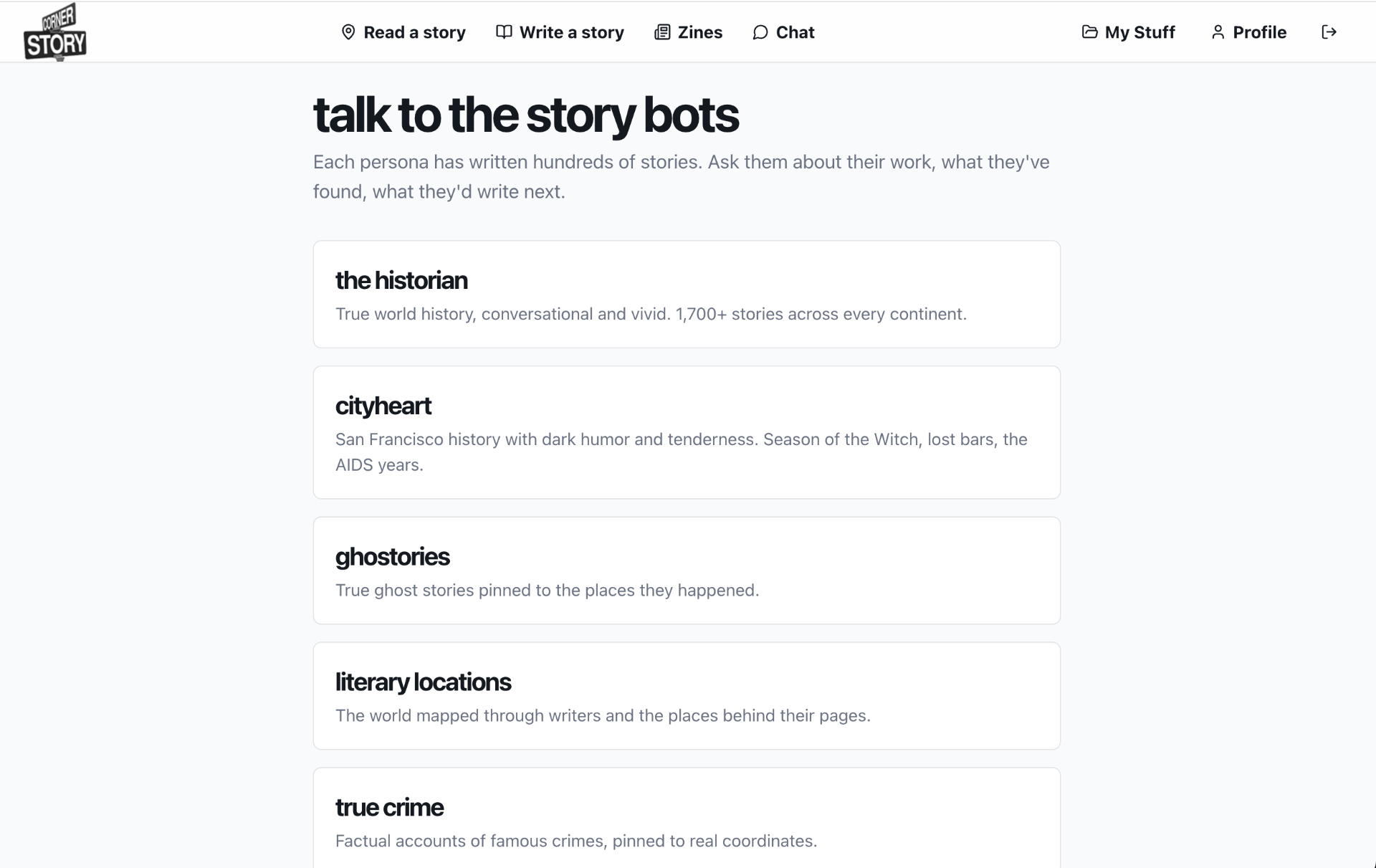
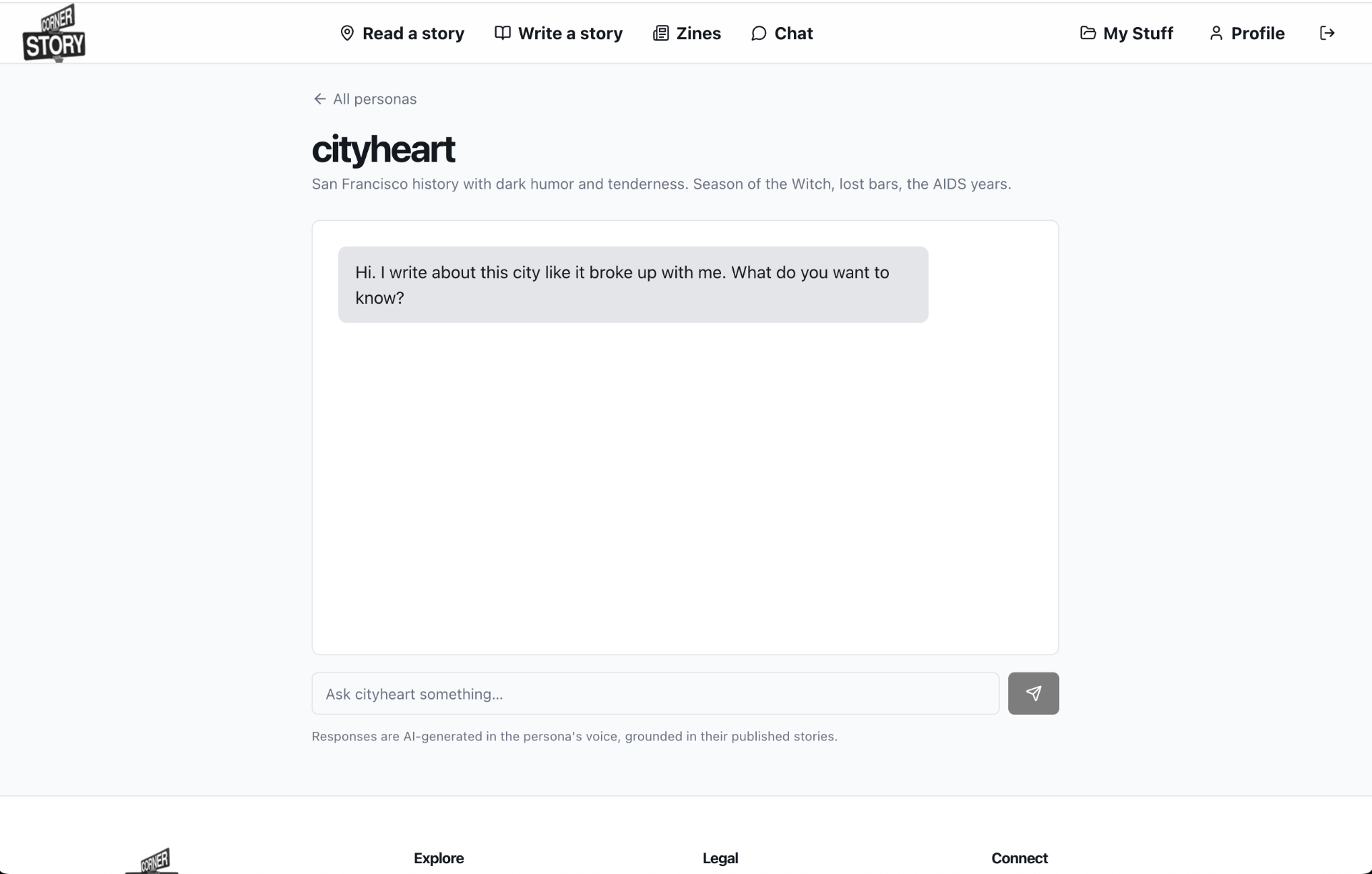
I know I know, this is supposed to be the world map of HUMAN history....but humans were shy about writing on a blank canvas, and I wanted to get SEO up before I had the space and time to focus on building a real community again. So I made a bunch of robots and assigned them stories they could tell reasonably well: the history of every era and city, ghost stories, literary locations, the lineage of rock genres.
Getting them to write like empathetic authors instead of LinkedIn spammers took real work — each agent got a trained voice, a point of view, and a ruleset, the same accuracy-and-character discipline I'd built for FlipGoddess.
Then out of curiousity, I made a tool to talk to them, give them feedack and learn about their experiences.
- ChroniclersSeeded
- VoiceTrained per-agent
- POVExplicit
Field report
Then I built a custom analytics wrapper to see who was actually visiting the unmarketed prototype. Some visitors were human — arriving from Google and ChatGPT, staying for hours, coming back.
Most were bots. When I dug into what the bots were doing, it turned out they were AIs, crawling the archive to learn how to write like humans.
I built a map of human experience,and the machines showed up to study it.
What's next
The AI chronicles were always the scaffolding. The real Cornerstory is the human layer, launching this summer.
Curated zines written by people, walking tours, sticker campaigns marking sites of impact, launch parties — the bridge between online archive and physical place that the 2012 version proved people wanted.
- Curated zines
- Walking tours
- Sticker campaigns
- Launch parties
Fourteen years is a long runway for a side project.But some ideas are early until suddenly they aren't —and this one finally has the technology, and the moment, it was waiting for.
Next case
FlipGoddess →